Herman Miller vs. Steelcase: An Honest Comparison for Commercial Buyers
Austin Frantell · 9 min read · March 17, 2026
Herman Miller and Steelcase are the two names that dominate the commercial furniture conversation. If you're specifying for a corporate project, a tenant improvement, or even a growing office, you'll inevitably end up comparing them.
Having worked with both lines extensively, I can tell you this upfront: neither brand is universally "better." They're both excellent — but they're different in ways that actually matter when you're spending real money on a real project. Here's where those differences show up.
The Brands at a Glance
Herman Miller (now part of MillerKnoll) built its reputation on design-forward, iconic products. The Aeron chair is arguably the most recognizable piece of office furniture ever made. Their portfolio leans toward design innovation and clean, modern aesthetics. They acquired Knoll in 2021, broadening their reach significantly.
Steelcase is the larger company by revenue and has the broadest product portfolio in the industry. They've historically leaned toward research-driven workplace solutions — partnering with organizations to study how people actually work and then designing products around those findings. Their dealer network is the largest in the industry.
Seating: Aeron vs. Leap (and Beyond)
This is where most comparisons start, and for good reason — seating is typically the most personal furniture decision in any project.
Herman Miller Aeron. All-mesh construction (seat and back), three sizes (A, B, C), PostureFit SL lumbar support. The Aeron is polarizing — people tend to love the mesh or find it too firm. The sizing model is unique in the industry and ensures a better fit when you match the right size to the user, but it also means you may need to stock multiple sizes in a large installation.
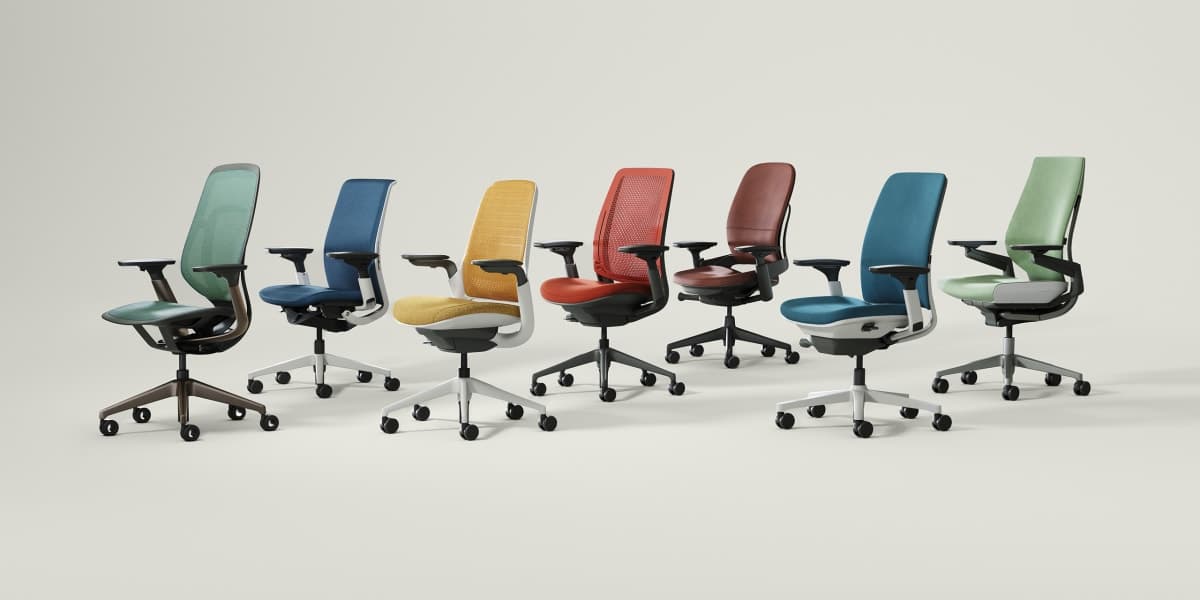
Steelcase Leap. Upholstered foam seat and back, one size with extensive adjustability, Live Back technology that flexes with your spine. The Leap tends to feel more immediately comfortable to a wider range of people out of the box. Its fabric options integrate easily with broader interior palettes.
The honest take: In large-scale deployments, the Leap is often easier to specify because one size fits most. The Aeron delivers exceptional ergonomics when properly sized but adds complexity to procurement. Both chairs have earned their 20+ year reputations. Get samples and let your people try them — that's the only real way to decide.
Beyond the flagships, both brands have strong mid-range options. The Herman Miller Cosm is a beautiful, auto-adjusting chair that works well in shared or flex spaces. The Steelcase Series 1 and Series 2 offer excellent ergonomics at a lower price point with a massive range of configurations.
Desks and Height-Adjustable Tables
Height-adjustable desks have moved from perk to expectation in most commercial environments. Both brands have strong offerings here, but the approach differs.
Herman Miller Nevi. Clean, minimal design. T-leg or Y-leg base options. Simple two-button programmable controller. It's a well-built, good-looking desk that does exactly what it needs to do without overcomplicating things.
Steelcase Migration SE. More configuration options — multiple base styles, integrated cable management accessories, broader range of worksurface sizes. The Migration line is designed to integrate tightly with Steelcase's broader systems furniture ecosystem.
The difference: Herman Miller desks tend to prioritize design simplicity. Steelcase desks tend to prioritize configurability and integration with their panel and storage systems. If you're doing a full Steelcase installation with systems furniture, Migration integrates seamlessly. If you want a standalone height-adjustable desk that looks great on its own, Nevi is hard to beat.
Systems Furniture and Workstations
This is where the comparison gets more nuanced, because systems furniture (cubicles, benching, panel-based workstations) is the backbone of most large commercial projects.
Herman Miller Layout Studio is a freestanding benching system — modern, open, and designed for collaborative floor plans. It's elegant and flexible, but it's not a panel system. For more enclosed workstations, MillerKnoll's Knoll Dividends Horizon or the legacy Ethospace system are the options, though Ethospace is being phased down.
Steelcase Answer is a full panel system with a massive installed base. It's been a workhorse for decades. For open benching, Steelcase Frameone and Steelcase Migration SE Benching offer modern, flexible configurations. Steelcase's advantage here is sheer breadth — they have a workstation solution for essentially every layout type and density target.
The gap: Steelcase has a deeper systems furniture portfolio. If your project involves traditional panel systems or highly configured workstation environments, Steelcase offers more options. Herman Miller (through the MillerKnoll portfolio) is competitive in modern open-plan layouts but has fewer options for traditional enclosed workstations.
Warranty
This is one of the most concrete differences between the two brands, and it matters for total cost of ownership.
Herman Miller: 12-year warranty on most products. Covers defects in materials and workmanship. Pneumatic cylinders, casters, and certain wear components have specific coverage terms. The 12-year warranty is strong and well-supported.
Steelcase: Limited lifetime warranty on most products. "Lifetime" means the useful life of the product as determined by Steelcase, which in practice extends well beyond 12 years for most commercial applications. It covers structural components, mechanisms, pneumatic cylinders, and more.
Bottom line: Steelcase's warranty is longer on paper and in practice. For buyers making a 15-20 year investment, that difference can be meaningful — especially on seating where mechanisms and cylinders eventually wear.
Pricing and Dealer Networks
Both brands operate through authorized dealer networks, and both use a list-price-with-discount model. Neither is consistently "cheaper" than the other — pricing depends heavily on the dealer relationship, the project size, and whether cooperative purchasing contracts are in play.
That said, there are patterns:
- Steelcase tends to have a broader dealer network, which can create more competitive pricing in markets with multiple Steelcase dealers.
- Herman Miller (MillerKnoll) dealers tend to carry a wider portfolio of complementary brands through the MillerKnoll family (Knoll, HAY, Muuto, etc.), which can simplify multi-brand projects.
- Discount levels off list price are similar for both brands at comparable project sizes. Expect 30-50% off list on most commercial projects through an authorized dealer.
If you're evaluating both brands, working with a knowledgeable dealer who carries both (or getting competitive quotes from dealers representing each) is the best way to compare real-world pricing.
Resale Value
This matters more than most buyers think about upfront — especially for companies that may relocate, downsize, or refresh their space in 5-10 years.
Both brands hold their resale value better than almost any other commercial furniture manufacturer. In the pre-owned market, Herman Miller and Steelcase products command the highest prices and sell the fastest.
Herman Miller generally has a slight edge in resale value, particularly for iconic products like the Aeron and Eames lines. The Aeron's brand recognition means it holds 40-60% of its original value in the resale market even after years of use.
Steelcase products hold strong resale value too, particularly the Leap, Gesture, and Answer panel systems. The massive installed base of Steelcase product means there's always demand for replacement parts and matching pieces.
So Which One Should You Choose?
Here's the framework I use when helping clients decide:
Lean toward Herman Miller (MillerKnoll) if:
- Design aesthetics and brand recognition are priorities
- You're doing a modern, open-plan layout
- You want to source from a single family of brands (MillerKnoll portfolio)
- Your team has strong preferences for specific HM products (Aeron, Cosm, etc.)
Lean toward Steelcase if:
- You need the broadest possible product portfolio from one manufacturer
- Traditional panel systems or highly configured workstations are part of the project
- Warranty length is a deciding factor
- You want the largest dealer network and widest regional coverage
Or — and this is more common than people think — use both. There's nothing wrong with specifying Steelcase workstations and Herman Miller seating, or vice versa. The best project isn't the one with the purest brand allegiance; it's the one where every product is the right product for its application.
Working on a project right now?
Share your scope and timeline — Austin and his team of specialists will review your project and follow up with tailored guidance.
Start a Project Request →Related Articles
Buying Office Furniture for the First Time: What Nobody Tells You
Everything first-time commercial furniture buyers wish they knew — from lead times to hidden costs.
8 min readBuying GuideHow to Set Up a Home Office That Your Company Will Reimburse
What most companies cover in home office stipends, how to make the business case, and how to prioritize your spending for maximum comfort and productivity.
6 min readBuying GuideOffice Furniture for Small Businesses: How to Get Quality Without the Corporate Budget
Smart strategies for small businesses to furnish their office professionally without overspending.
8 min read