Office Furniture Lead Times: What to Expect and How to Plan
Austin Frantell · 5 min read · May 20, 2025
"How long will it take to get our furniture?"
It's one of the first questions every buyer asks — and one of the most commonly underestimated parts of a commercial furniture project. Understanding lead times before you start ordering can be the difference between a smooth move-in and a team sitting on folding chairs for six weeks.
What "Lead Time" Actually Means
Lead time is the period between when a manufacturer receives a confirmed order and when the product ships from the factory. It does not include transit time to your city, receiving and inspection, or installation scheduling. Those add additional days or weeks depending on your location and project size.
So when a manufacturer says "4–6 weeks lead time," the total time from order placement to furniture in your space is more like 6–9 weeks once you factor in freight, receiving, and installation coordination.
Standard Lead Times by Product Type
These ranges reflect typical lead times for new, made-to-order commercial furniture as of 2025. Actual timelines vary by manufacturer, product line, and current demand:
Task chairs: 2–4 weeks. Chairs from major brands (Steelcase, Herman Miller, Haworth) with standard fabric and finish options ship relatively quickly. Custom upholstery or specialty mechanisms can push this to 6–8 weeks.
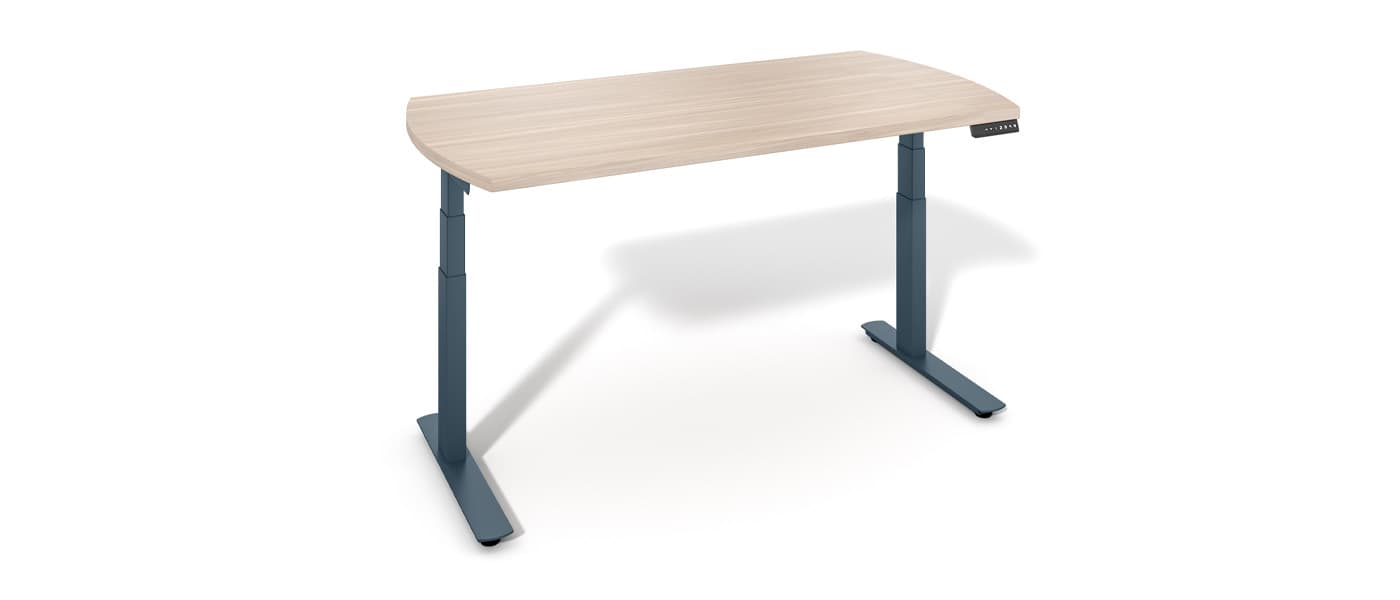
Freestanding desks and tables: 3–5 weeks. Standard desks with common finish options. Height-adjustable desks may take slightly longer depending on base manufacturer.
Systems furniture (panel-based workstations): 5–8 weeks. Panel systems involve more components, wiring, and configuration complexity. Large orders may require phased manufacturing.
Architectural walls: 6–12 weeks. Demountable wall systems are often custom-manufactured per project, especially glass configurations. DIRTT's digitally manufactured approach can sometimes compress this timeline.
Lounge and ancillary furniture: 4–8 weeks. Sofas, lounge chairs, and soft seating — especially with COM (Customer's Own Material) fabric — sit at the longer end of this range.
Filing and storage: 3–6 weeks. Metal storage products (lateral files, lockers, bookcases) from brands like Steelcase or HON.
Conference tables: 4–8 weeks. Large, custom conference tables with integrated power/data can take longer, especially with veneer or stone tops.
What Causes Delays
Even when a manufacturer quotes a specific lead time, several factors can push it further out:
Custom finishes or fabrics. Anything outside the manufacturer's standard options — a specific paint color, a COM fabric, a non-standard laminate — adds time. The fabric itself may have its own lead time before the furniture manufacturer can even start production.
Supply chain disruptions. The furniture industry is still affected by periodic shortages of foam, steel, electronic components (for sit-stand desks), and specialty hardware. Your dealer should flag any known supply issues at the time of quoting.
Order changes after submission. Modifying an order after it's been placed — changing fabric, adding stations, altering configurations — can reset the lead time clock. Get your specifications locked before placing the order.
Seasonal demand. Q3 and Q4 tend to be the busiest periods for furniture manufacturers as companies try to close out capital budgets before year-end. Lead times often extend 1–2 weeks during peak season.
Tariffs and import delays. Products manufactured overseas or containing imported components may be subject to customs delays, especially during periods of tariff changes or port congestion.
How to Plan Around Lead Times
Order early. The single best thing you can do is place your furniture order as early as possible — ideally as soon as floor plans are finalized and product specifications are locked. Don't wait for construction to finish before ordering.
Use quick-ship programs. Most major manufacturers offer quick-ship or express programs for popular products in standard configurations. Steelcase's Quick Ship program, for example, can deliver select products in 5–10 business days. These are ideal for filling urgent needs or supplementing a larger order that's still in production.
Consider pre-owned or in-stock options. Pre-owned and refurbished furniture can often be delivered in 1–3 weeks, since it's already manufactured and sitting in a dealer's warehouse. For time-sensitive projects, mixing new and pre-owned product can compress the overall timeline significantly.
Build buffer into your schedule. Whatever lead time the manufacturer quotes, add 1–2 weeks of buffer. This accounts for freight delays, damaged-in-transit replacements, and installation scheduling conflicts. Projects that plan for the best case often deliver in the worst case.
Phase your order. If some areas of your space will be occupied before others, phase the furniture order accordingly. Get the critical-path items (workstations for the teams moving in first) ordered and delivered first, with ancillary furniture and common areas following.
What Your Dealer Should Tell You
A good dealer proactively communicates lead time expectations during the quoting process — not after you've placed the order. They should:
- Confirm current lead times for every product in your quote
- Flag any items with unusually long or uncertain timelines
- Recommend substitutions if a specific product will cause a bottleneck
- Provide an acknowledgment with expected ship dates after the order is placed
- Update you if anything changes during production
If your dealer can't tell you when your furniture will ship, that's a problem.
The Bottom Line
Lead times aren't just a logistics detail — they're a project planning fundamental. The buyers who handle this well are the ones who ask about lead times before they choose products, build buffer into their schedules, and work with dealers who communicate proactively. The ones who don't end up scrambling for temporary furniture and explaining to leadership why the new office isn't ready.
Working on a project right now?
Share your scope and timeline — Austin and his team of specialists will review your project and follow up with tailored guidance.
Start a Project Request →Related Articles
Solving the Noise Problem: Acoustic Solutions for Open Offices
Practical acoustic treatments and furniture solutions for noisy open office environments.
7 min readIndustry KnowledgeBIFMA Certification Explained: What It Means and Why It Matters
BIFMA sets the safety and quality standards for commercial furniture. Here's what their certifications actually test and why procurement teams should care.
6 min readIndustry KnowledgeThe Dealer Markup Myth: What Furniture Dealers Actually Charge and Why
Do furniture dealers mark up prices? Yes — but not the way you think. Here's how dealer pricing actually works and why going direct isn't always cheaper.
7 min read